
ENT SPECIALIST MALAYSIA
Ear, Nose & Throat Conditions
Common ENT condtions that could be causing your symptoms.
I am Dr. Bathma, Consultant ENT (Ear, Nose & Throat) Surgeon at KPJ Klang Specialist Hospital (Selangor, Malaysia). I offer personalised ENT treatment for both adults and children who are suffering from these common ENT conditions.
ENT SPECIALIST MALAYSIA
Ear, Nose & Throat Conditions
Common ENT condtions that could be causing your symptoms
I am Dr. Bathma, Consultant ENT (Ear, Nose & Throat) Surgeon at KPJ Klang Specialist Hospital (Selangor, Malaysia). I offer personalised ENT care for both adults and childrenwho are suffering from these common ENT conditions.
Dr. BATHMA SUSIBALAN
ENT Specialist & surgeon
(klang, MALAYSIA)
Concerned About a Possible Ear, Nose or Throat Condition?
Ear, nose and throat problems are often linked to specific medical conditions—some common, others more complex. Understanding what might be causing your symptoms is the first step toward proper treatment.
The sections below outline the most frequently seen ENT conditions affecting the ears, nose, throat, and neck. Each group highlights key conditions, what they mean, and when it’s time to seek help. If you recognise any of these in yourself or a loved one, an early ENT assessment can make a big difference.
Early diagnosis leads to more effective treatment.


Ear, nose and throat problems are often linked to specific medical conditions—some common, others more complex. Understanding what might be causing your symptoms is the first step toward proper treatment.
Early diagnosis leads to more effective treatment.

Ear & Hearing Conditions

Nose & Sinus Conditions

Throat & Voice Conditions

Neck & General Conditions
Ear & Hearing Conditions
Ear conditions can affect your hearing, balance, and quality of life. Some problems may seem minor at first but can lead to long-term issues if left untreated. This section outlines common ENT-related ear conditions—what they are, what causes them, and how they are typically managed.

When Should You See An ENT Specialist?
If you’re experiencing persistent ear pain, reduced hearing, balance problems, or recurring infections, it’s time to see an ENT specialist. Early diagnosis and targeted treatment can prevent long-term damage and help restore your quality of life.
Ear Infections (Otitis Media & Otitis Externa)
Ear infections are one of the most frequent ENT conditions, especially in children. They can affect the middle ear (otitis media) or the outer ear canal (otitis externa). These infections are usually caused by bacteria or viruses and often follow a cold, flu, or exposure to water in the ears. Treatment may involve antibiotic or antifungal ear drops, oral medications, and in chronic or recurrent cases, insertion of ventilation tubes (grommets) to drain fluid and prevent further infections.
Hearing Loss
Hearing loss can occur gradually or suddenly, affecting one or both ears. It may result from age-related changes, excessive noise exposure, earwax blockage, middle ear fluid, or inner ear damage. Depending on the cause, treatment options may include ear cleaning, medical therapy for infections, hearing aids, or surgery such as ossicular chain repair or cochlear implants in selected cases.
Tinnitus (Ringing in the Ears)
Tinnitus refers to a ringing, buzzing, or hissing sound in the ears with no external source. It is often linked to hearing loss, prolonged exposure to loud sounds, ear infections, or inner ear damage. While tinnitus cannot always be completely cured, it can often be managed with sound therapy, hearing aids, lifestyle adjustments, and treating any underlying ear conditions.
Balance Disorders and Vertigo
This can create a sensation of spinning or unsteadiness and are often caused by problems in the inner ear. Conditions like benign paroxysmal positional vertigo (BPPV), vestibular neuritis, or labyrinthitis can affect the vestibular system. Treatment may include repositioning manoeuvres, medication for dizziness or inflammation, and vestibular rehabilitation exercises to restore balance.
Impacted Earwax (Cerumen Impaction)
This occurs when wax builds up and blocks the ear canal, leading to hearing loss, discomfort, or a blocked sensation. This is often caused by overuse of cotton buds or naturally narrow ear canals. Treatment involves softening drops or professional removal through irrigation or microsuction by an ENT specialist.
Eustachian Tube Dysfunction
Affects the small passage that connects the middle ear to the back of the nose. When it becomes blocked or inflamed—often due to allergies, colds, or sinus infections—it can cause ear pressure, muffled hearing, or a popping sensation. Treatment typically includes nasal decongestants, antihistamines, nasal sprays, and in persistent cases, balloon dilation or other minor procedures.
See Related Ear & Hearing
Nose & Sinus Conditions
Nasal and sinus conditions are among the most common reasons patients seek ENT care. They can affect your ability to breathe, sleep well, and live comfortably. Understanding the underlying condition helps guide effective treatment. Below are some of the most commonly treated nose-related ENT conditions.
When Should You See An ENT Specialist?
If you experience frequent nasal congestion, sinus pressure, or nosebleeds—or if your symptoms don’t respond to over-the-counter treatments—an ENT assessment can help you breathe easier and feel better.
Sinusitis
Sinusitis is the inflammation or infection of the sinus cavities, causing facial pain, pressure, nasal congestion, and postnasal drip. It’s usually triggered by viral or bacterial infections, allergies, or structural blockages. If untreated, it may lead to complications like facial cellulitis or, rarely, nerve-related pain such as trigeminal neuralgia. Treatment ranges from nasal sprays and decongestants to antibiotics or endoscopic sinus surgery (FESS) for chronic cases.
Allergic Rhinitis
Allergic rhinitis occurs when the immune system overreacts to airborne allergens like dust, pollen, mould, or pet dander. Symptoms include sneezing, runny nose, nasal congestion, and itchy eyes or throat. It is managed with antihistamines, nasal sprays, lifestyle adjustments, or allergy testing and immunotherapy for long-term control.
Nasal Polyps
Nasal polyps are soft, non-cancerous growths that develop in the nasal passages or sinuses due to chronic inflammation, allergies, or infections. Smaller polyps are treated with nasal steroid sprays or tablets, while larger ones may require surgical removal to restore airflow and reduce recurrent sinus infections.
Deviated Nasal Septum
A deviated septum occurs when the wall between your nasal passages is off-centre, leading to breathing difficulties, chronic congestion, or frequent sinus infections. It may result from injury or develop naturally. Mild cases may improve with nasal sprays, while more significant deviation may require septoplasty to correct the alignment.
Chronic Nasal Congestion
Chronic nasal congestion refers to long-term blockage of the nasal passages, often caused by allergies, sinusitis, or structural issues like enlarged turbinates or polyps. Treatment depends on the cause and may include antihistamines, decongestants, nasal rinses, or corrective surgery.
Nosebleeds (Epistaxis)
Nosebleeds are usually minor but can become frequent or severe due to dry air, fragile blood vessels, trauma, or nasal inflammation. While most stop with simple first aid, ongoing nosebleeds may require cauterisation, nasal packing, or investigation to rule out underlying causes.
See Related Nose & Sinus
Throat, Voice & Swallowing Conditions
The throat plays a vital role in speaking, breathing, and swallowing. When problems arise, they can interfere with your voice, eating, or sleep—and in some cases, signal more serious conditions. Below are some of the most commonly treated throat-related ENT conditions.
When Should You See An ENT Specialist?
If you’re experiencing ongoing hoarseness, difficulty swallowing, throat pain, or changes in your voice, it’s important to be evaluated by an ENT specialist. Early assessment can help identify the cause and offer lasting relief.
Tonsillitis
Tonsillitis is the inflammation or infection of the tonsils, which are lymphatic tissues located at the back of the throat. It is typically caused by viral or bacterial infections and is more common in children. Symptoms include sore throat, fever, difficulty swallowing, and swollen glands. Mild cases often resolve with rest and medication, but frequent or severe episodes may require tonsillectomy (surgical removal of the tonsils).
Laryngitis and Hoarseness
Laryngitis refers to inflammation of the voice box (larynx), often leading to hoarseness or loss of voice. It can result from viral infections, vocal strain, smoking, or acid reflux. Acute cases usually improve with voice rest and hydration, while chronic hoarseness may require laryngoscopy to assess for nodules, polyps, or more serious conditions. Treatment may include voice therapy, reflux control, or minor surgical procedures.
Swallowing Difficulties (Dysphagia)
Dysphagia is the sensation of difficulty or discomfort when swallowing. It may be caused by throat infections, enlarged tonsils, acid reflux, neurological conditions, or structural abnormalities. Management begins with identifying the underlying cause through endoscopy or imaging, followed by treatment such as dietary modifications, medication, or surgery if necessary.
Laryngopharyngeal Reflux (Silent Reflux)
This condition occurs when stomach acid flows up into the throat and voice box, often without the typical symptoms of heartburn. It can cause chronic throat clearing, hoarseness, coughing, and a lump-in-the-throat sensation. Treatment includes lifestyle changes, acid-suppressing medications, and in some cases, further investigation to rule out structural causes.
Vocal Cord Nodules and Polyps
These are benign growths on the vocal cords, usually resulting from vocal overuse or strain—common in teachers, singers, and public speakers. They can lead to persistent hoarseness, vocal fatigue, and reduced voice quality. Management often involves voice therapy and, if needed, surgical removal through microlaryngoscopy.
Globus Sensation (Lump in the Throat Feeling)
Globus is the persistent feeling of a lump or tightness in the throat, despite no physical obstruction. It is often linked to stress, muscle tension, or reflux. While not dangerous, it can be distressing. Treatment focuses on addressing contributing factors such as acid reflux, anxiety, or muscle dysfunction through targeted therapy and reassurance.
See Related Throat & Swallowing
Neck & General ENT Conditions
Not all ENT issues start with ear, nose, or throat symptoms. Some conditions involve the neck, glands, or sleep-related breathing, and may indicate infections, structural problems, or even tumours. Early evaluation is key to identifying these issues and preventing complications. Below are some of the most commonly treated neck and general ENT conditions.
When Should You See An ENT Specialist?
If you’ve noticed a lump in your neck, persistent snoring, difficulty breathing at night, or unexplained swelling, don’t delay. These symptoms may indicate a treatable ENT condition that should be properly assessed.
Neck Lumps
Neck lumps can arise from swollen lymph nodes, cysts, infections, or masses in the thyroid or salivary glands. They may feel tender or painless and can vary in size. Causes range from common viral infections to more serious conditions such as thyroid nodules or tumours. Evaluation often includes physical examination, ultrasound, or fine needle aspiration (FNA), with treatment based on the underlying diagnosis.
Thyroid Disorders and Enlargement
Thyroid disorders affect the thyroid gland at the front of the neck and may include enlargement (goitre), nodules, or hormonal imbalance such as hyperthyroidism and hypothyroidism. While many conditions are benign, some may cause swallowing or breathing difficulty, voice changes, or indicate thyroid cancer. Causes include autoimmune disease, iodine deficiency, or abnormal thyroid cell growth. Management involves blood tests, ultrasound, and biopsy when needed, with treatment ranging from medication to surgical removal if the gland is enlarged, symptomatic, or suspicious.
Salivary Gland Disorders
Salivary gland conditions include infections, duct blockages, and benign or malignant tumours. Symptoms may include swelling, pain, or pus discharge near the jaw or under the tongue. Causes include dehydration, stones, or viral infections like mumps. Treatment depends on the diagnosis and may involve antibiotics, gland massage, sialogogues (to stimulate saliva), or surgical excision.
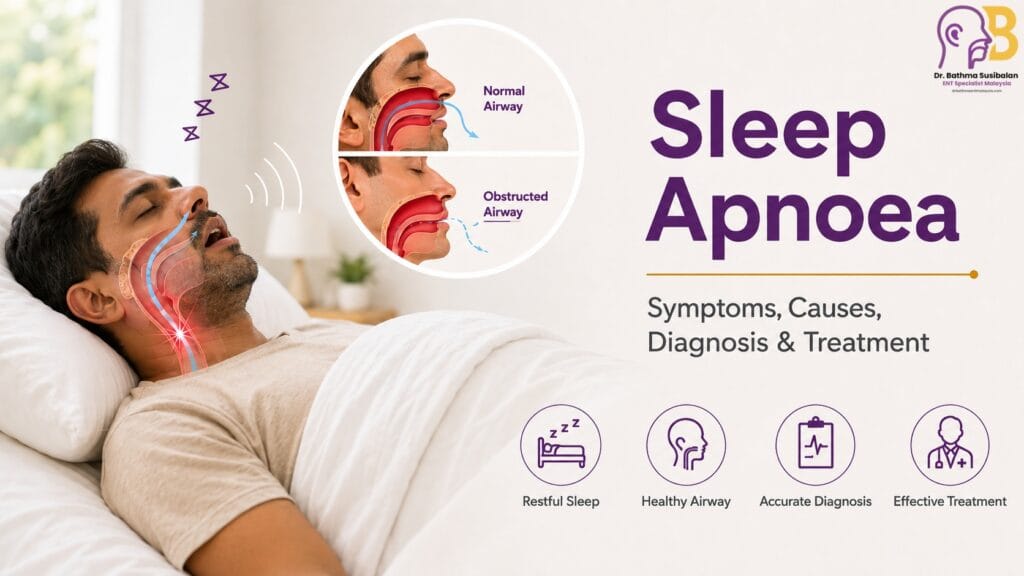
Obstructive Sleep Apnoea (OSA)
OSA is a sleep disorder where breathing repeatedly stops and starts during sleep due to airway obstruction. It can lead to loud snoring, daytime fatigue, and increased risk of heart disease or stroke. Common causes include enlarged tonsils, nasal blockage, obesity, or a narrow airway. Diagnosis may involve a sleep study, and treatment includes weight loss, nasal or throat surgery, CPAP therapy, or use of oral appliances.
Snoring and Sleep-Disordered Breathing
Snoring is caused by vibration of soft tissues in the airway and can be a sign of partial airway obstruction. While often harmless, persistent or loud snoring may indicate OSA. Causes include nasal congestion, enlarged tonsils, or a floppy soft palate. Treatment options include nasal sprays, allergy management, tonsillectomy, or procedures to tighten or reshape the airway.
Swollen Lymph Nodes (Lymphadenopathy)
Lymph nodes may swell in response to infections, inflammation, or less commonly – cancer malignancies. Swollen nodes typically occur in the neck and may feel firm or tender. Most are caused by viral or bacterial infections and resolve on their own, but persistent, hard, or enlarging nodes should be assessed with imaging or biopsy.
See Related Neck & General
Latest Blog Articles
Sleep Apnoea (OSA): Symptoms, Diagnosis & Treatment in Klang, Malaysia
Loud snoring, breathing pauses or daytime exhaustion? Dr Bathma, ENT Specialist at KPJ Klang, explains Obstructive Sleep Apnoea (OSA) diagnosis…Thyroid Disorders in Malaysia: Symptoms, Causes, Diagnosis & Treatment Explained
Learn about thyroid disorders including hypothyroidism, hyperthyroidism, goitre, nodules and thyroid cancer. Dr Bathma, ENT Specialist in Klang, explains symptoms,…


Get Help Today
Contact me by phone or via the booking form to schedule your visit, choosing a convenient date and time. You will receive confirmation and reminders promptly.
Dr. Bathma
Visit my clinic on your scheduled date to discuss your concerns and symptoms with me. I will conduct a thorough examination and provide an initial diagnosis.
Review your personalized treatment plan and understand the recommended procedures and their benefits. Begin your journey to recovery with my expert care.
Frequently Asked Questions

Contact & Request Appointment
Schedule a consultation by using the form below, or calling her clinic or using the online booking button.
Please note that consultation is ONLY by appointment – no walk-ins.
Appointment Form
Clinic Contact
Tel: +603-33777888 (Ext: 7006)
Mobile: +6011-1623 4708
Suite Level 3A, KPJ Klang Specialist Hospital 102, Persiaran Rajawali/KU 1, Bandar Baru Klang, 41150 Klang, Selangor, Malaysia
Mon – Fri: 08:30 – 17:00
Sat: 08:30 – 12:30
Sun & Holidays: closed
 English (UK)
  Bahasa Melayu
  தமிழ்
தமிழ் 